One Family, Two Eye-Care Pathways: Cataract and ICL Treatment in Shanghai
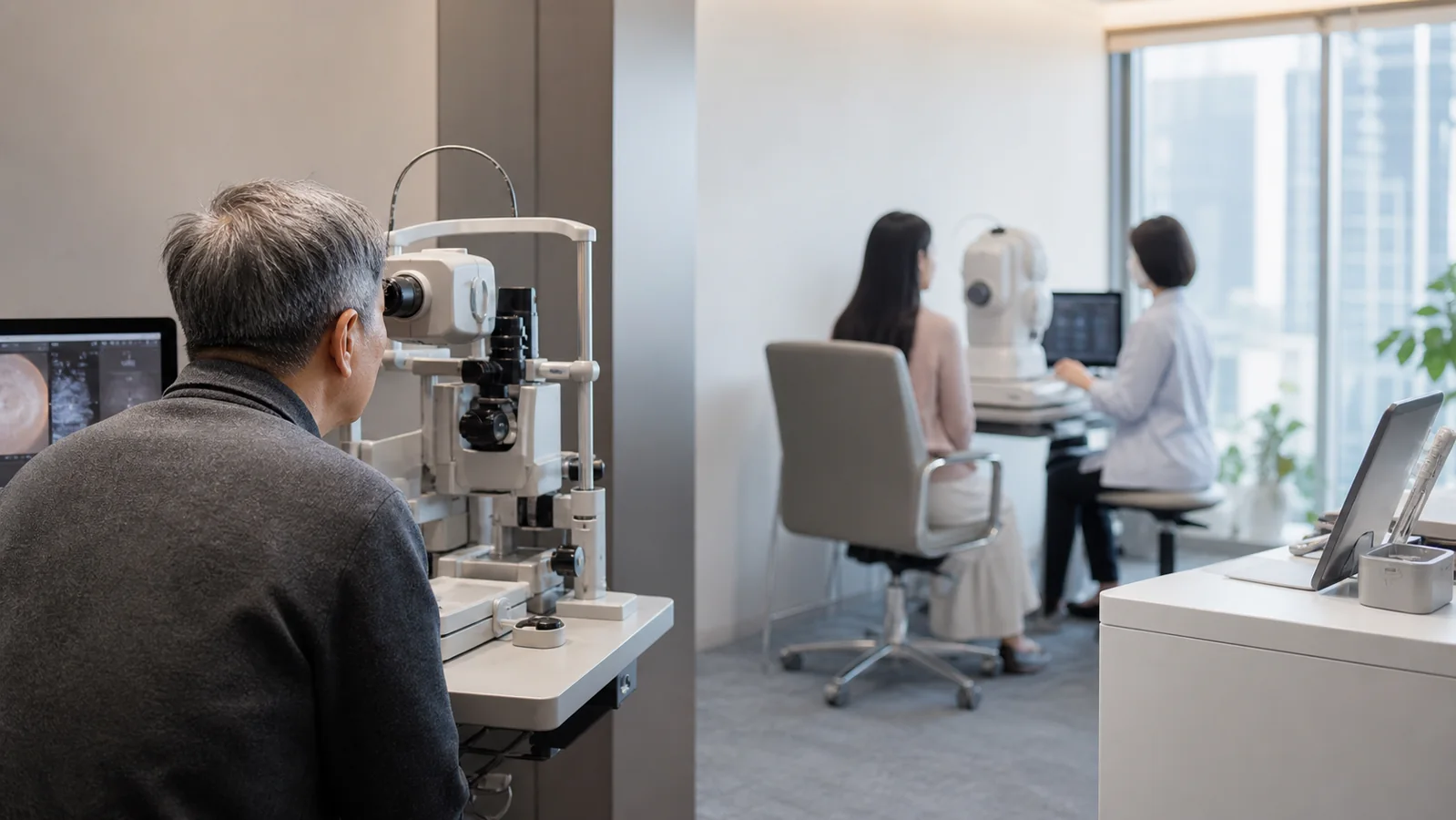
Original CareNavigator AI-generated editorial image.
Quick Answer
A hospital-origin report published by Dazhong described an overseas Chinese father and his adult daughter who travelled to Shanghai with two very different eye-care needs. The father needed assessment and treatment for a cataract that had affected daily life for several years. His daughter wanted an alternative to glasses and contact lenses and was assessed for implantable collamer lens surgery.
At Shanghai Aier Eye Hospital, each family member followed a separate clinical pathway: detailed examinations, a procedure-specific discussion, treatment and follow-up. The case shows why China can be a serious option for international families seeking modern ophthalmology care. It also shows that a family trip can be planned around more than one eye-care need without treating those needs as interchangeable.
One Family, Two Different Decisions
The father's eyesight had gradually become less reliable. According to the report, blurred vision was affecting driving, work and reading. This was no longer a minor inconvenience. It was changing how he moved through daily life.
His daughter faced a different problem. She had relied on glasses and contact lenses but found them increasingly inconvenient, including discomfort associated with contact-lens use. She wanted to understand whether an implantable lens could offer another route.
Their decisions belonged to different generations and different stages of eye health. One involved cataract surgery and the choice of an intraocular lens. The other involved refractive correction in an eye without cataract. Planning them together did not mean giving them the same solution. It meant creating one family journey around two individualized clinical reviews.
The Father's Cataract Pathway
The report said that the father underwent a detailed ophthalmic examination at Shanghai Aier Eye Hospital. The clinical team identified an age-related cataract alongside other eye findings and discussed how his visual priorities extended beyond distance vision to reading and intermediate tasks.
The treatment described in the report combined femtosecond-laser-assisted cataract surgery with implantation of a full-range intraocular lens. This type of lens discussion matters because cataract treatment is not only about removing a cloudy natural lens. The replacement-lens choice can affect how a person approaches distance, computer work, reading and other daily activities after surgery.
The report described a strong improvement at the next-day review. That result belongs to this single reported case. The more transferable point is the decision process: the patient's eye measurements, other findings, daily visual needs and expectations were considered before the lens was selected.
The Daughter's ICL Pathway
The daughter underwent her own pre-operative assessment rather than simply following the father's treatment plan. According to the report, her examination and lifestyle needs led to a discussion of EVO ICL V5, an implantable collamer lens used for refractive correction.
ICL surgery places a corrective lens inside the eye without removing the natural lens. It is different from cataract surgery and from corneal laser procedures such as LASIK or SMILE. Whether it is appropriate depends on measurements and eye health, including prescription, anterior chamber anatomy, corneal condition and retinal findings.
The report said that she completed the procedure and had stable unaided vision at follow-up. As with the father's result, this is a description of one person's pathway, not an expected result for every patient.
Why Family-Based Eye-Care Planning Matters
International medical travel is often planned around one diagnosis and one patient. Real family life is less tidy.
A parent may need cataract treatment while an adult child wants refractive assessment. Another family may combine a specialist eye consultation with diabetic-eye screening, retinal review or a second opinion about a complex diagnosis. When the clinical needs are appropriate, coordinating those reviews within one trip can reduce duplicated planning and make practical support easier for the family.
The useful work happens before tickets are booked. Each person needs a separate records review, examination plan and list of questions. Families also need to understand whether procedures can sensibly fit within the same visit, how long early follow-up may take and what care should continue after they return home.
Why Shanghai Aier Is Relevant to International Patients
The original report identified Shanghai Aier Eye Hospital as the treating institution. Aier's official information describes a broad ophthalmology network covering cataract, refractive surgery, retinal disease, glaucoma, corneal and ocular-surface conditions, pediatric eye care and other subspecialties.
For international patients, specialist breadth matters. A person who arrives asking about one procedure may discover that another clinical question needs to be addressed first. A mature eye-care pathway should be able to assess the whole eye, explain the available options and identify when a requested procedure is not the right starting point.
The Dazhong report also described bilingual support, international-service coordination, electronic records and continued remote follow-up. The exact language, insurance and follow-up services available should be confirmed for each patient's pathway before travel.
Cross-Border Follow-Up Is Part of the Treatment Plan
Eye procedures do not end when the patient leaves the operating room. Early review, medication instructions, warning signs and longer-term follow-up all need to be clear.
For a patient returning overseas, that means asking practical questions in advance:
- Which reviews must happen in Shanghai before departure?
- What medical documents and imaging will the patient receive?
- Can follow-up information be shared electronically?
- Which checks can be completed by an ophthalmologist at home?
- Who should be contacted if symptoms change after the patient leaves China?
The report said that the family received electronic follow-up support after returning overseas. That continuity is especially important when several family members receive different forms of care during the same trip.
How CareNavigator Can Coordinate an Eye-Care Pathway in China
CareNavigator works closely with Shanghai Aier Eye Hospital. We can help international patients and families identify the relevant ophthalmology subspecialist, coordinate preliminary communication and appointments, and understand which hospital pathway may fit the clinical question.
Our role can also include comparing appropriate options in China, clarifying what records and examinations are needed, helping families prepare questions about procedures and lens choices, and coordinating practical arrangements and follow-up. Where another institution or specialist may be more relevant, we can help the family compare that route as well. See How We Help for the wider coordination process.
The ophthalmologist and hospital team determine diagnosis, procedure suitability, lens selection and treatment. CareNavigator helps the family reach that clinical discussion with a clearer case and a more workable journey.
What This Report Does Not Establish
This case does not mean every family can or should arrange several procedures during one trip. It does not mean every cataract patient needs a premium intraocular lens, or that every person seeking freedom from glasses is suitable for ICL.
It shows something more practical: China has eye-care institutions capable of managing different ophthalmology needs within an international patient pathway. The right starting point is still an individual assessment of each family member.
If you or your family are considering cataract treatment, ICL, laser vision correction or a complex eye-care review in China, tell us your situation. CareNavigator can help you compare relevant hospitals, specialists and technologies, coordinate the review pathway, and plan the practical steps before and after treatment.
Frequently Asked Questions
Can two family members arrange different eye treatments during one trip to China?
It may be possible when each person's records and clinical needs are reviewed separately. The hospital should confirm the examination, procedure and follow-up requirements for each family member before travel arrangements are finalized.
Is cataract surgery the same as ICL surgery?
No. Cataract surgery removes the cloudy natural lens and replaces it with an intraocular lens. ICL surgery adds a corrective lens while preserving the natural lens. They address different clinical needs.
How is a lens selected for cataract surgery?
The ophthalmologist uses eye measurements, ocular health, lifestyle, visual priorities and other clinical factors to discuss suitable lens options. No lens design is automatically appropriate for every patient.
Who may be assessed for ICL surgery?
ICL may be discussed for selected people seeking refractive correction, including some who may not be ideal candidates for corneal laser surgery. Suitability requires a detailed ophthalmic examination and surgeon assessment.
What should international patients confirm before travelling for eye treatment?
Patients should confirm the planned examinations, likely pathway, expected early follow-up, medical-document format, language support, payment method and how care will continue after they return home.
Can CareNavigator decide which eye procedure or lens I need?
No. Those decisions remain with qualified ophthalmologists and the treating institution. CareNavigator helps patients reach appropriate specialists, compare pathways, prepare for review and coordinate the wider journey.
Source-Led Update Note
This article is an original source-led editorial rewrite based primarily on a sponsored hospital-origin report published by Dazhong, with supplementary institutional information from Aier Eye Hospital. It is not a translation or republication of the source article. The reported outcomes relate to the individuals described and do not predict another patient's result.