Eye Treatment in Shanghai for International Patients: Options, Cost and Planning
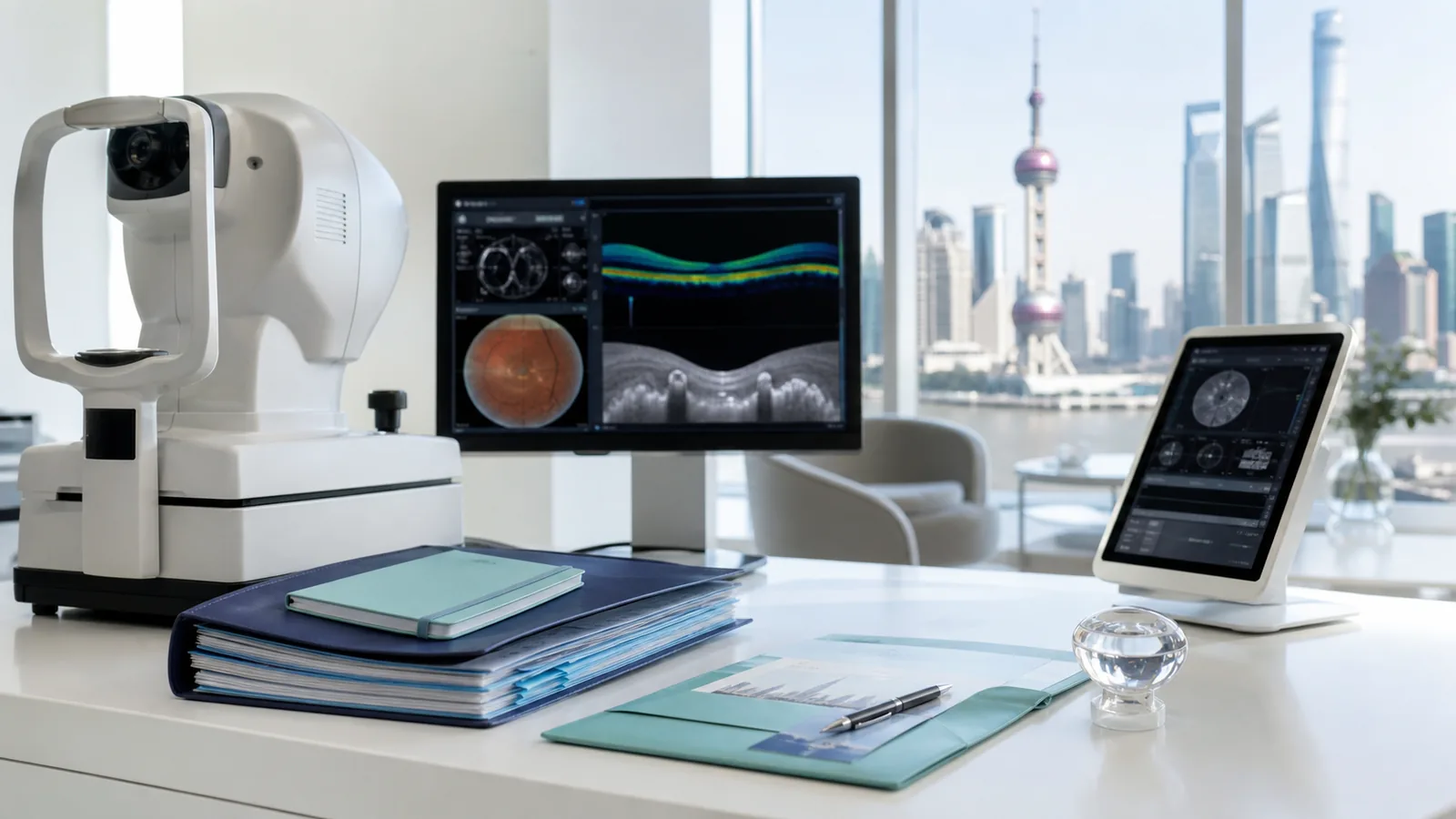
Original CareNavigator AI-generated editorial image.
Quick Answer
Shanghai can be a serious destination to compare for international patients seeking refractive surgery, cataract and lens care, specialist eye assessment or broader ophthalmology review. Public sources document several eye-care settings with English or multilingual services, including specialty public institutions, private eye centres and international medical services.
The appropriate pathway depends on the patient’s diagnosis, eye measurements, preferred procedure, required specialist expertise and follow-up needs. International patients should compare the complete pathway: pre-travel review, in-person assessment, final recommendation, price inclusions, required local checks, English records and care after returning home.
Key Takeaways
- Shanghai offers more than one type of ophthalmology service setting.
- A preliminary online discussion may help, but final procedure selection often requires in-person measurements.
- Public prices are useful only when the provider, date, per-eye or both-eye unit and inclusions are clear.
- Avoid planning around guaranteed same-day surgery or a fixed three-day trip.
- Follow-up in Australia or New Zealand should be arranged before departure from China.
- CareNavigator helps families compare established hospital and specialist pathways rather than relying on a generic hospital list.
Why Are International Patients Comparing Shanghai for Eye Care?
Shanghai combines large clinical institutions, specialty eye-care teams, private providers and international medical services within one city.
Official and institutional sources document:
- Public specialty ophthalmology services
- International or multilingual medical access at selected institutions
- Refractive pathways including SMILE, LASIK and ICL at selected providers
- Cataract, retinal, glaucoma, corneal and ocular-surface services
- Shanghai-based teams with substantial published experience in selected refractive procedures
- Continued investment in diagnostic and surgical technology
These points show that relevant capability exists. They do not mean every institution provides every procedure or accepts every international case. The useful work is matching the patient’s question to the appropriate specialist pathway.
For Australians and New Zealanders considering self-pay care abroad, Shanghai may also be worth comparing when local private pricing, access or the available treatment pathway does not meet the family’s needs. The comparison should remain case-specific and include travel and continuity, not only the procedure fee.
What Eye-Care Pathways Can International Patients Explore?
| Pathway | Questions the patient may need answered |
|---|---|
| Refractive surgery | Should SMILE, LASIK, PRK or ICL be discussed after complete measurements? |
| Cataract and lens care | Which tests and lens categories are relevant, and how should one-eye or two-eye care be planned? |
| High-myopia assessment | What retinal, pressure, corneal and lens findings should be reviewed before considering surgery? |
| Retinal, glaucoma or corneal review | Which subspecialist and tests are needed, and whether Shanghai adds a useful second pathway? |
| Comprehensive eye assessment | What examination is appropriate for diabetes, age-related change, visual symptoms or family history? |
A patient does not need to arrive with a chosen procedure. In many cases, the better starting point is a clear clinical question and the available records.
What Information Should Be Sent Before Travel?
A hospital or specialist team may ask for:
- Current diagnosis or reason for seeking review
- Latest spectacle and contact-lens prescriptions
- Contact-lens type and wearing pattern
- Previous eye reports and images
- Past eye procedures
- Current medicines
- Relevant general medical conditions
- Recent refraction, corneal imaging or retinal assessment when available
- The patient’s main visual priorities and concerns
- Preferred travel period and practical constraints
Records can support an initial review, but the treating institution may need to repeat measurements in Shanghai before confirming the pathway.
For elective refractive and lens procedures, tell the team about contact-lens wear early. Different lens types can affect measurements, and the hospital should provide its own preparation instructions.
How Should Patients Compare Eye Hospitals in Shanghai?
Do not begin with a ranking alone.
Compare:
- Relevant specialist experience: Is the team experienced with the specific procedure or condition?
- Diagnostic completeness: Which tests are standard, and what happens if the findings change the plan?
- Technology and lens availability: Is the proposed platform or implant currently available and appropriate for discussion?
- Quote scope: Is the price per eye or both eyes? Are tests, medicines and follow-up included?
- Communication: Is English available for consultation, consent and records?
- Early review: Which checks must be completed before departure?
- Continuity: How will records and follow-up transfer to Australia or New Zealand?
- Escalation: Who should the patient contact if a problem develops?
A well-known institution may offer deep specialist resources but have a more complex intake process. A private or international centre may offer a clearer service pathway, but the patient still needs to verify the specialist, assessment and complete fee.
Read: How to Choose an Eye Hospital in Shanghai
Can the Procedure Be Confirmed Before Travel?
Sometimes a remote review can clarify whether a pathway is worth exploring. It may identify missing records, narrow the specialist department or provide an indicative fee range.
It usually cannot replace final measurements.
The proposed procedure may change because:
- Refraction is unstable
- Contact lenses affected measurements
- Corneal mapping or thickness changes the discussion
- Dry eye or another ocular-surface finding needs attention
- Retinal, glaucoma or corneal findings require further review
- ICL-specific anatomy or endothelial measurements are not suitable
- Cataract biometry changes the lens discussion
- The required lens or implant is not available
- The clinical team concludes that surgery should not proceed
This is why travel should be planned around assessment and decision milestones, not only an expected procedure date.
Read: What Tests Are Needed Before ICL, SMILE or Cataract Surgery?
How Much Can Eye Treatment in Shanghai Cost?
Current public Shanghai evidence is strongest for selected refractive procedures. One provider publicly listed the following both-eye examples when checked on 25 August 2026:
- Femto-LASIK: CNY 13,800
- SMILE categories: CNY 18,800–29,800
- ICL, TICL and V5 categories: CNY 34,000–47,800
These are provider-specific menu prices, not Shanghai-wide benchmarks or hospital quotations. The available page did not fully itemize consultation, diagnostic testing, medicines, follow-up or international-patient charges.
A meaningful quote should state:
- Per eye or both eyes
- Consultation and specialist review
- Diagnostic tests
- Procedure and facility
- Lens or implant
- Medicines and protective items
- Early postoperative checks
- Later or remote follow-up
- English records
- International-patient surcharge
- Refund or rescheduling policy
For Australian and New Zealand patients, total pathway cost also includes flights, accommodation, companion travel, possible extra nights and home-country follow-up.
SMILE, LASIK or ICL: Can Patients Compare Before Travelling?
Patients can understand the basic differences before travel, but should not use an online comparison as a procedure selector.
SMILE and LASIK reshape the cornea using different techniques. PRK is a surface-ablation pathway. ICL places a phakic lens inside the eye while the natural lens remains. Each depends on different measurements and carries different follow-up questions.
The practical pre-travel goal is to identify which discussions remain open and which tests will decide them.
Read: SMILE vs LASIK vs ICL in China
How Long Should International Patients Stay in Shanghai?
There is no responsible universal stay length.
The pathway can change because:
- Contact-lens preparation was incomplete
- Measurements need repeating
- An ocular-surface issue affects accuracy
- Additional specialist review is needed
- A lens needs ordering
- The original procedure is changed
- Early postoperative checks require more time
- Symptoms or findings delay departure
Ask the receiving institution to describe the milestones that must be completed before leaving. Flexible travel arrangements are safer than a fixed “three-day surgery trip” assumption.
What Follow-Up Is Needed After Returning Home?
Before leaving China, patients should receive:
- Procedure and operative records
- Preoperative and postoperative measurements
- Implant or lens details
- Medicine instructions
- Required review schedule
- Written travel and activity guidance
- Warning signs
- A China-side contact route
- A plan for review in Australia or New Zealand
- English reports or agreed translation
Remote follow-up can support communication, but it cannot replace every pressure check, corneal examination, retinal review or other in-person assessment.
Read: Follow-Up After Eye Surgery in China
What Does CareNavigator Help With?
CareNavigator helps international patients and families identify and compare established hospitals and specialist teams in China with demonstrated experience relevant to the case.
For an eye-care pathway, this may include:
- Clarifying the question the family needs the hospital to answer
- Comparing different Shanghai service settings
- Identifying specialist pathways worth reviewing
- Coordinating preliminary communication and case review
- Comparing quote scope and practical arrangements
- Preparing questions for the specialist
- Planning the hospital journey, local stay and follow-up handover
Procedure selection and clinical recommendations remain with the qualified ophthalmology team.
Tell us what eye condition or procedure you are exploring, what assessment has already been completed and what matters most to your family. CareNavigator can help you compare Shanghai pathways and turn the available information into a structured next step.
Frequently Asked Questions
Is eye treatment in Shanghai available to international patients?
Selected Shanghai institutions publicly document international or multilingual ophthalmology services. The relevant department, procedure availability, appointment route and language support should be confirmed for the individual case.
Can I know the final procedure before travelling?
A remote review may narrow the options, but final recommendations often depend on in-person measurements and examination findings.
Are Shanghai eye-surgery prices quoted per eye or for both eyes?
It varies. Some published Shanghai refractive prices are for both eyes, while overseas providers may quote per eye. Always confirm the unit and what is included.
Is Shanghai cheaper than private eye surgery in Australia or New Zealand?
Selected public price examples may be competitive, but the meaningful comparison includes assessment, procedure, lens, medicines, follow-up, travel and care at home. China should not be assumed to be cheaper for every case.
How should I choose between a public specialty hospital and a private eye centre?
Compare the relevant specialist team, diagnostic pathway, quote scope, communication, appointment process and follow-up. Ownership alone does not determine the right pathway.
How quickly can eye surgery be arranged in Shanghai?
Based on CareNavigator’s coordination experience, international patients can usually be connected with an appropriate Shanghai eye specialist for assessment and receive a proposed next-step arrangement within one to two working days once the necessary information is ready. If surgery is considered, the procedure schedule is then confirmed according to the examination findings, contact-lens preparation, lens availability and the hospital’s clinical schedule.
Can CareNavigator tell me which procedure I need?
CareNavigator can help compare credible pathways and coordinate review. The treating ophthalmologist determines whether a procedure is clinically appropriate.
Source Notes
- Shanghai Government International Medical Services directory
- Shanghai Eye Disease Prevention and Treatment Center
- Fudan University specialist-team profile
- AAO preoperative refractive-surgery evaluation
- Shanghai provider public fee examples