EVO+ ICL (V5) in Shanghai: What International Patients Should Know About Technology and Cost
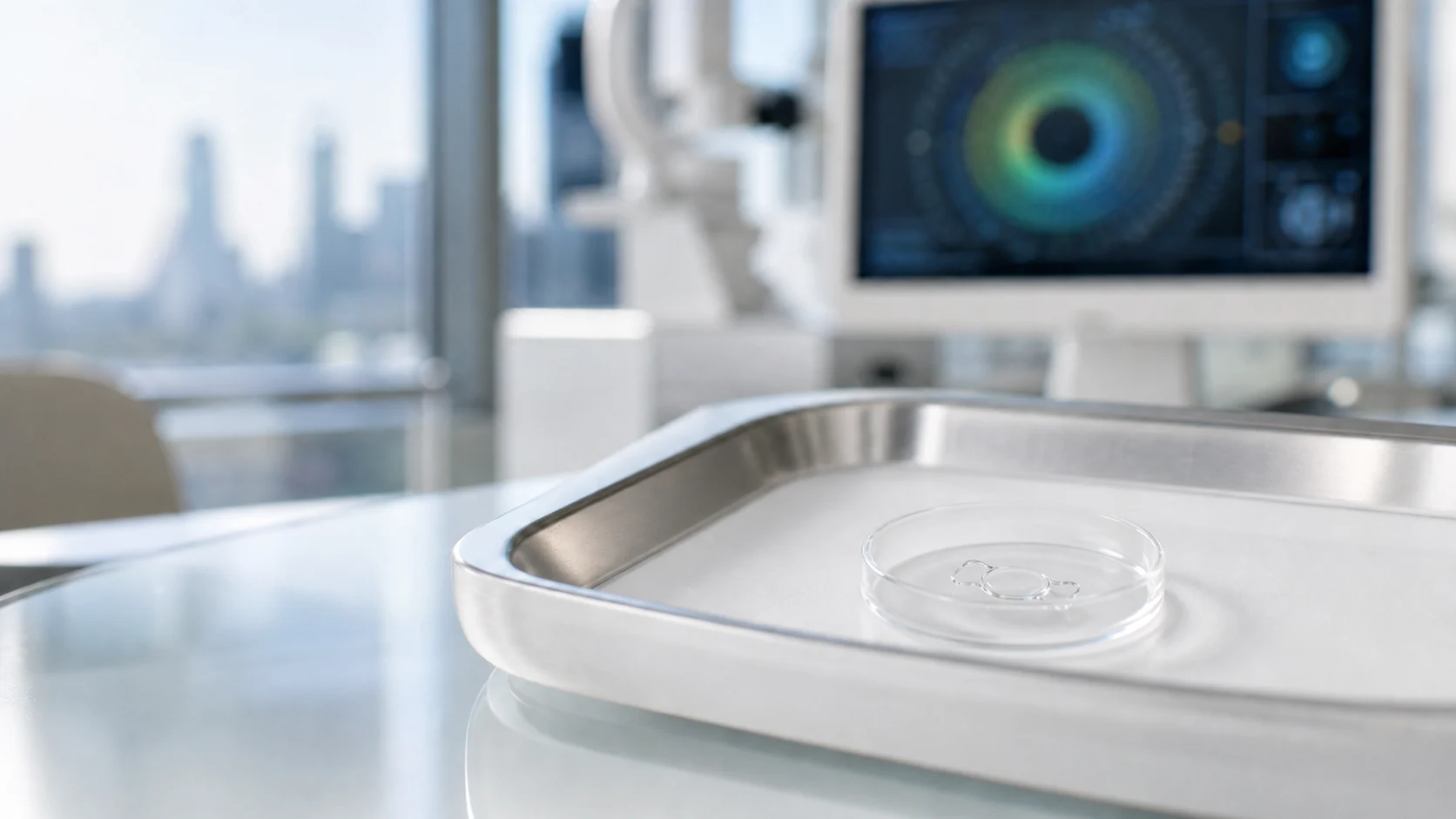
Original CareNavigator-generated editorial image.
Quick Answer
Shanghai is now offering EVO+ ICL (V5), a newer implantable collamer lens with a larger optic designed for people whose pupils become larger in low light. In January 2026, Xinmin Evening News reported that Shanghai Aier Eye Hospital completed one of China's first V5 procedures and the hospital's first case using the lens. For international patients comparing vision-correction surgery abroad, the more useful point is not the "first" label alone. Shanghai combines access to a recently introduced lens, experienced ICL teams, advanced pre-operative diagnostics, and self-pay pricing that can compare favorably with some private options in Australia and New Zealand.
What Did Shanghai Aier Report?
According to a January 2026 report by Xinmin Evening News published on Shangguan News, Shanghai Aier Eye Hospital completed one of China's first EVO+ ICL (V5) implantations and its first procedure using the new lens.
The reported patient had myopia and astigmatism and had been considering the previous V4c lens. The article said he chose to wait for V5 because night vision was important to him.
The manufacturer, STAAR Surgical, describes EVO+ as its next-generation ICL with a larger optic intended to improve visual quality for patients with larger pupils. STAAR reported that the product received regulatory approval in China in mid-2025 and that initial shipments from Switzerland began in November 2025.
What Is Different About EVO+ ICL (V5)?
ICL surgery places a thin corrective lens behind the iris and in front of the natural lens. It does not remove the natural lens, as cataract surgery does, and it does not reshape the cornea in the way LASIK or SMILE does.
The V5 update is mainly about the optic size. The Xinmin Evening News report described an expanded optical zone intended to provide better coverage when the pupil enlarges in darker conditions. This may be relevant to people who are concerned about night driving, glare, halos, or other low-light visual demands.
That does not make V5 automatically better for every eye. The choice between LASIK, SMILE, PRK, ICL, or another pathway depends on detailed measurements, prescription, astigmatism, corneal condition, anterior chamber depth, retinal health, age, lifestyle, and the surgeon's assessment. The lens can be removed or exchanged by a qualified surgeon if clinically needed, but ICL remains an intraocular operation with its own risks and follow-up requirements.
Why Shanghai Is Worth Comparing for ICL Surgery
The strongest case for Shanghai is not one news report. It is the surrounding clinical infrastructure.
In 2024, Shanghai's official English-language news service reported that Shanghai Aier Eye Hospital and Fudan University's Eye, Ear, Nose and Throat Hospital had been designated as training centers for advanced ICL surgery. The same report noted that Shanghai Aier had opened an international phakic intraocular lens surgery center.
A separate SHINE report described Shanghai Aier as one of the first local hospitals to introduce an AI-assisted diagnostic system using whole-eye data and ray-tracing technology for individualized refractive-surgery planning. Shanghai Aier's own institutional information also lists refractive surgery, ICL, cataract, retinal care, and other ophthalmic specialties, as well as national drug and medical-device clinical-trial qualifications.
Together, these signals make Shanghai a serious place to compare advanced vision-correction options. International patients can look beyond a single procedure and ask whether the hospital can evaluate the whole eye, explain the trade-offs among different technologies, and support follow-up after the patient returns home.
How Does ICL Cost in China Compare With Other Destinations?
Public prices are not fully like-for-like. Some include diagnostics, medication, theatre fees, anesthesia, and follow-up; others do not. Lens generation, spherical versus toric correction, surgeon, city, and foreign-patient surcharges can also change the total.
The figures below are useful as a comparison starting point, not as a quote from Shanghai Aier. Approximate US-dollar conversions use the European Central Bank reference rates published on 21 July 2026 and are rounded for readability:
| Destination | Published ICL Price Example | Notes |
|---|---|---|
| China | Around RMB 39,800-43,800 for both eyes (approximately USD 5,900-6,500) in recent public V5 market examples | Shanghai Aier's case-specific written quotation and inclusions still need confirmation |
| Australia | AUD 5,500 per eye (approximately USD 3,900 per eye) at one Melbourne provider | Published package includes scans, hospital and anesthetist fees, custom lens, medication, and early follow-ups |
| New Zealand | From NZD 7,000 per eye (approximately USD 4,100 per eye) at one Auckland provider | Final price follows assessment and lens selection |
| Canada | From CAD 4,030 per eye (approximately USD 2,900 per eye) at one Toronto provider | Intraocular procedure price varies by procedure and lens type |
| Singapore | SGD 6,386-7,664 per eye (approximately USD 4,950-5,940 per eye) at Singapore National Eye Centre | Published rate is for eligible local categories; international-patient surcharges may apply |
| India | Around INR 140,000-180,000 for both eyes (approximately USD 1,450-1,870) at one provider | Published estimate varies by spherical versus toric lens and package inclusions |
China is not automatically the lowest-cost destination; published Indian prices can be lower. The stronger China comparison is the combination of newer lens availability, specialist depth, advanced diagnostics, and competitive self-pay cost. For patients comparing Australia or New Zealand private pricing, that combination may make a Shanghai review financially meaningful even after travel and accommodation are added.
What Does the Total ICL Pathway Cost?
The lens or surgery fee is only one part of the decision. A useful comparison should also include:
- pre-operative diagnostics
- the lens and surgery
- theatre charges, medication, and early follow-up
- any international-patient surcharge
- flights and accommodation
- interpretation and local coordination
- additional nights if the clinical plan changes
- follow-up after the patient returns home
For selected international patients, China's cost advantage may become clearer when the full pathway is compared rather than the lens price alone. Shanghai can combine advanced diagnostics, newer-generation lens availability, specialist assessment, surgery, and coordinated support within one self-pay pathway. In higher-cost private healthcare markets, the combined clinical package may remain competitive even after reasonable travel and accommodation costs are added.
What Should Be Included in a Proper ICL Comparison?
Do not compare only the lens or surgery headline price. Ask each hospital or clinic for the same information:
- Which ICL model is proposed, and is it spherical or toric?
- Are all measurements, retinal checks, medication, theatre charges, and early reviews included?
- Is the lens already available, or must it be ordered?
- Will both eyes be treated on the same day or separately?
- What happens if the in-person examination changes the plan?
- Which review must happen before the patient flies home?
- Can later follow-up be completed with a local ophthalmologist?
- How will the treating hospital respond if a concern develops after departure?
A lower quotation can become less attractive if the package excludes essential diagnostics or requires a longer stay. A higher quotation may include a more complete pathway. The responsible comparison is the total clinical and practical plan.
Where Cataract Surgery and Laser Vision Correction Fit
ICL is only one part of China's ophthalmology opportunity.
For younger adults seeking vision correction, the key decision may be among LASIK, SMILE, PRK, and ICL. For older patients with cataract or presbyopia, the relevant discussion may involve cataract surgery, monofocal or premium intraocular lenses, or refractive lens exchange. These procedures solve different problems and should not be treated as interchangeable price products.
Shanghai's value is that international patients can compare several modern ophthalmic pathways within a mature specialist environment. This also makes eye care suitable for a broader CareNavigator content cluster: ICL and high myopia, cataract and lens selection, laser vision correction, and international-patient ophthalmology pathways.
How CareNavigator Can Support an Eye-Surgery Pathway in China
CareNavigator can help an international patient move from a broad interest in "eye surgery in China" to a structured comparison.
That may include identifying hospitals and specialists worth reviewing, clarifying whether ICL or another refractive pathway should be discussed, checking lens availability, comparing written quotations, coordinating hospital communication, and planning accommodation, transport, language support, and follow-up.
If you are comparing ICL, cataract surgery, or laser vision correction in China, tell us your current prescription or diagnosis, what procedure you have been offered, your preferred travel dates, and the questions you still need answered.
CareNavigator can help you compare relevant China-based hospital, specialist, technology, timing, and cost options and coordinate the next steps with the receiving medical team.
Frequently Asked Questions
Is EVO+ ICL (V5) available in Shanghai?
Yes. Xinmin Evening News reported that Shanghai Aier Eye Hospital completed one of China's first V5 procedures in January 2026. Availability for a specific prescription and travel date should be checked before travel because the lens model and power must match the patient's measurements.
Is EVO+ ICL better than LASIK or SMILE?
It is a different type of procedure. ICL adds a lens inside the eye, while LASIK and SMILE reshape corneal tissue. The appropriate option depends on the patient's measurements, eye health, prescription, visual priorities, and clinical assessment.
How much does EVO+ ICL cost in China?
Recent public market examples place bilateral V5 ICL in China at roughly RMB 39,800-43,800, approximately USD 5,900-6,500 using the European Central Bank reference rates published on 21 July 2026. This is an early comparison range, not an official Shanghai Aier quotation. The final amount depends on lens type, astigmatism correction, diagnostics, surgeon, hospital, medication, follow-up, and package inclusions.
Is China cheaper than Australia, New Zealand, Singapore, Canada, or India for ICL?
China can compare favorably with some published private prices in Australia and New Zealand. It may overlap with Canadian and Singapore pricing depending on the lens and package, while published Indian prices can be lower. Patients should compare the total pathway, not currency-convert the surgery fee alone.
Does CareNavigator decide whether I am suitable for ICL?
The ophthalmic surgeon and hospital team determine suitability. CareNavigator helps patients identify relevant providers, prepare for review, compare pathways and quotations, and coordinate the medical-travel process.
Related CareNavigator Resources
- China Advanced Treatment Updates
- Why China
- How CareNavigator Helps
- Pathways Decision Library
- Tell Us Your Situation
Source-Led Update Note
This article is a source-led editorial rewrite based on reporting by Xinmin Evening News and additional official, manufacturer, hospital, and provider sources. It does not reproduce the original news report. Treatment suitability and the final plan require individual ophthalmic assessment.
Source Notes
Primary source: Xinmin Evening News, published via Shangguan News on 7 January 2026.
Additional references include STAAR Surgical's China launch announcement, Shanghai ICL training-center reporting, Shanghai Aier's diagnostic-technology reporting, Shanghai Aier's institutional profile, and the European Central Bank reference exchange rates. Price examples are linked in the comparison source record maintained for this article.