Pancreatic Cancer Patient Had Acute Pancreatitis Twice: Shanghai Doctors Complete a Difficult Tumor Resection
Source-led CareNavigator update on complex oncology surgery decision-making in China.
Quick Answer / What Happened
According to a Shangguan News report published on June 10, 2026, a 44-year-old pancreatic cancer patient underwent a difficult tumor resection at Zhongshan Hospital, Fudan University, after two episodes of acute pancreatitis during the preoperative treatment period. The report described the central challenge as not only whether surgery could be performed, but when surgery should be performed: earlier surgery could carry higher risk while inflammation remained active, while waiting longer could allow tumor progression or another pancreatitis episode.
Zhongshan Hospital, Fudan University is a leading Class A tertiary hospital in Shanghai. In the Shangguan News report, the patient received care from its pancreatic surgery team for this complex case.
Why This Matters
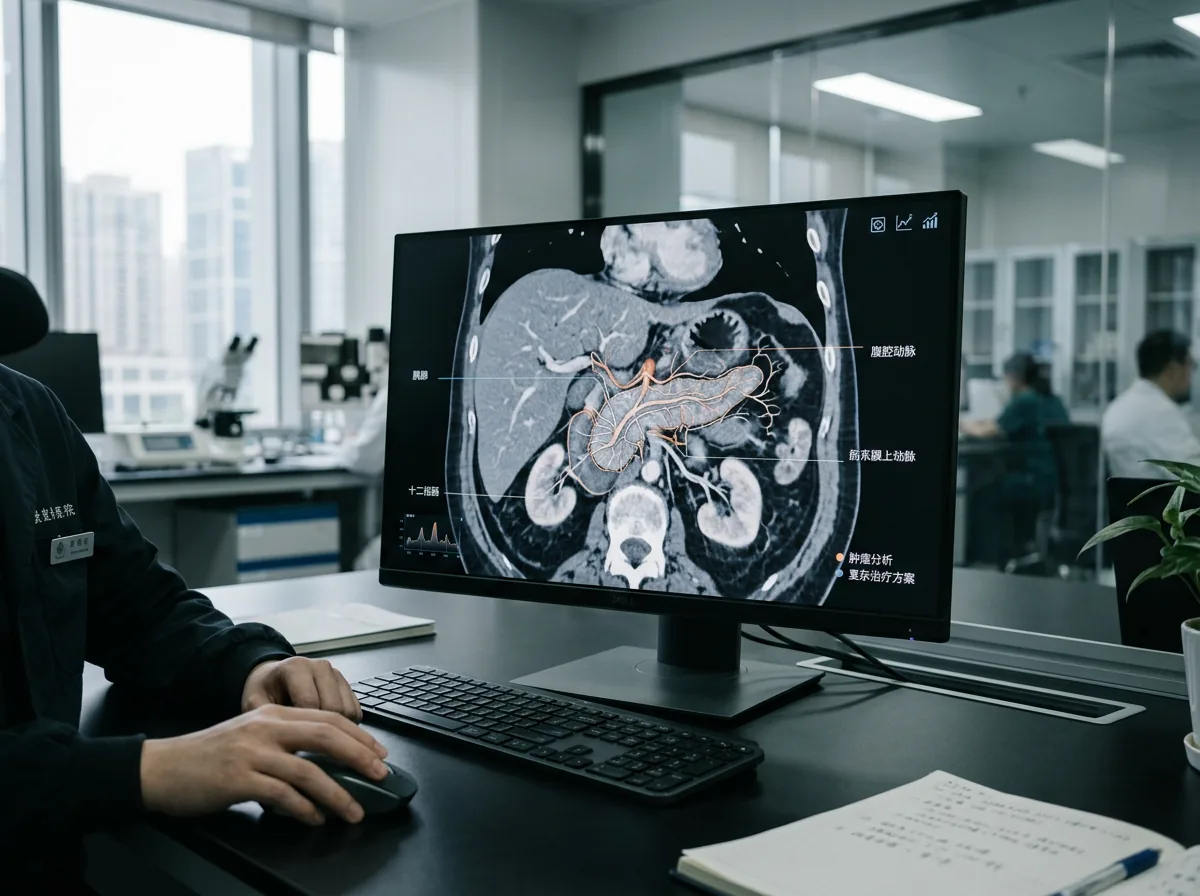
The Shangguan News report stated that the patient's pancreatic tumor was located in the head of the pancreas, was relatively large, and wrapped 360 degrees around the superior mesenteric vein. After systematic examination and comprehensive evaluation, the patient was diagnosed with "borderline resectable" pancreatic cancer.
According to the report, "borderline resectable" pancreatic cancer describes a situation where the tumor has closely attached to or invaded important blood vessels. The report said direct surgery in such cases may carry higher risk and lower likelihood of achieving optimal results, and that preoperative treatment is often used to improve the conditions for subsequent surgery.
According to the report, the medical team designed a chemotherapy plan for the patient.
What International Patients Should Understand
The report stated that the patient initially tolerated chemotherapy relatively well. However, during the third and fourth cycles of chemotherapy, he developed acute pancreatitis twice. The second episode was more serious, with obvious exudation around the pancreas and a pancreatic pseudocyst of about 8 centimeters, reaching a moderate-to-severe acute pancreatitis level. Doctors provided corresponding treatment, and the inflammation gradually improved.
Further CT examination suggested that the patient's left pancreatic duct was significantly dilated. According to the report, the tumor in the pancreatic head was identified as the cause of the obstruction. The report used an analogy: the tumor was like a stone blocking the outlet of a pipe - pancreatic fluid could not drain, pressure in the pancreatic duct rose, and this was described as triggering the pancreatitis.
At that point, the report described a treatment dilemma. If the team continued waiting, the tumor blocking the pancreatic duct would remain, pancreatitis could recur, and the tumor could progress. If surgery was performed quickly, the tissues around the pancreas had just experienced inflammation, swelling, adhesion, and necrosis; the original anatomical layers were disrupted, blood vessels were more fragile, and surgical difficulty and risk were clearly increased.
After repeated discussion, the team decided to operate as early as possible - three weeks after the last chemotherapy cycle, once drug toxicity had metabolized. The report described the goal as removing the lesion and relieving the obstruction.
What This Does NOT Mean
This report does not mean every pancreatic cancer patient is suitable for surgery, or that a similar approach applies to every case. The article describes one reported case in which the treating team evaluated tumor location, blood-vessel involvement, pancreatitis, inflammation control, treatment timing, and operative risk before proceeding.
How CareNavigator Can Help Patients Evaluate Relevance
For patients and families who see an update like this and wonder whether it may be relevant to their own situation, CareNavigator helps turn the news into a practical decision pathway. We help patients clarify their current diagnosis, treatment bottleneck, and decision point; compare whether China has relevant hospital, specialist, and technology options worth reviewing; coordinate case review with appropriate medical teams; and support the broader journey across hospital communication, pathway comparison, logistics, and follow-up planning. The final medical judgment remains with licensed clinicians and the responsible hospital team.
Surgical Course Reported By The Source
According to Shangguan News, the surgery was led by the patient's attending surgical team at Zhongshan Hospital. During the operation, the team needed to address the pancreatic pseudocyst and necrotic tissue formed after pancreatitis, re-identify anatomical layers disturbed by inflammation, and complete vascular resection and reconstruction while the tumor involved the branch of the superior mesenteric vein.
The report described the blood vessels in that area as thinner and more delicate, with extremely high difficulty for vascular anastomosis. It used the attending doctor's description that the entire integrated surgery was like "riding a bicycle across a single-log bridge in a rainstorm" - requiring stable direction and no room for deviation.
The report said the team ultimately cleared the pancreatic pseudocyst, completely removed the tumor, and successfully completed a pancreaticoduodenectomy combined with superior mesenteric vein resection and reconstruction. With support from the anesthesia and operating-room nursing teams, the surgery took six hours and was completed successfully.
After surgery, according to the report, the patient recovered well, was able to get out of bed on the first postoperative day, did not develop pancreatic fistula or other reported complications, and was discharged 12 days after surgery. Recovery trajectories described in a single reported case reflect the specifics of that patient's condition, treatment course, and clinical team, and should not be read as expected outcomes for other patients.
Treatment Philosophy From The Source
The Shangguan News report ended with a comment from the director of pancreatic surgery at Zhongshan Hospital. He said pancreatic cancer treatment has entered an era of comprehensive treatment. As drugs and treatment methods continue to improve, surgery remains a key step for patients who still have a chance of radical treatment. For complex and difficult cases, the team must grasp the overall rhythm of tumor treatment while making accurate judgments and acting promptly when the condition changes, using solid technical capability to help patients seek more opportunity.
Tell us what your family is trying to decide. Contact CareNavigator and provide your diagnosis, current treatment situation, and key questions. CareNavigator can help you explore whether China has relevant hospitals, specialists, and treatment technologies worth reviewing, coordinate case review with appropriate medical teams, and support the next steps across hospital communication, pathway comparison, logistics, and follow-up planning.
Related CareNavigator Resources
- China Advanced Treatment Updates
- Why China
- How CareNavigator Helps
- China Treatment Navigation Guide
- How to Compare Cancer Hospitals in China Before You Decide
Single-Case Outcome Note
This article summarizes a single reported patient case from Shangguan News. The recovery course described reflects the specific circumstances of that patient's condition, treatment sequence, and clinical team. It should not be read as an expected outcome for other patients.
Source-Led Update Note
This article summarizes publicly available reporting and cited source materials about medical developments in China. It is not CareNavigator's independent clinical assessment of the therapy and should not be read as medical advice for any individual patient. CareNavigator helps patients and families understand whether a reported China-based pathway may be relevant, compare options that may be worth reviewing, and prepare for informed conversations with qualified medical teams. Patient eligibility, risks, benefits, availability, and treatment decisions should be assessed by licensed clinicians and the responsible medical institution.
Source Notes
Primary media source: Jiefang Daily / Shangguan News article, titled "胰腺癌患者两次突发急性胰腺炎,手术时机怎么选?上海医生迎难而上完整摘瘤", published 2026-06-10, author Tang Wenjia, correspondent Zhang Xindi.
Source URL: https://www.jfdaily.com/staticsg/res/html/web/newsDetail.html?id=1126479
Do not use the source article's patient-doctor group photo on the CareNavigator website.