Shanghai-Kashgar Expert Review Supports a Rare Craniofacial Case From Kazakhstan
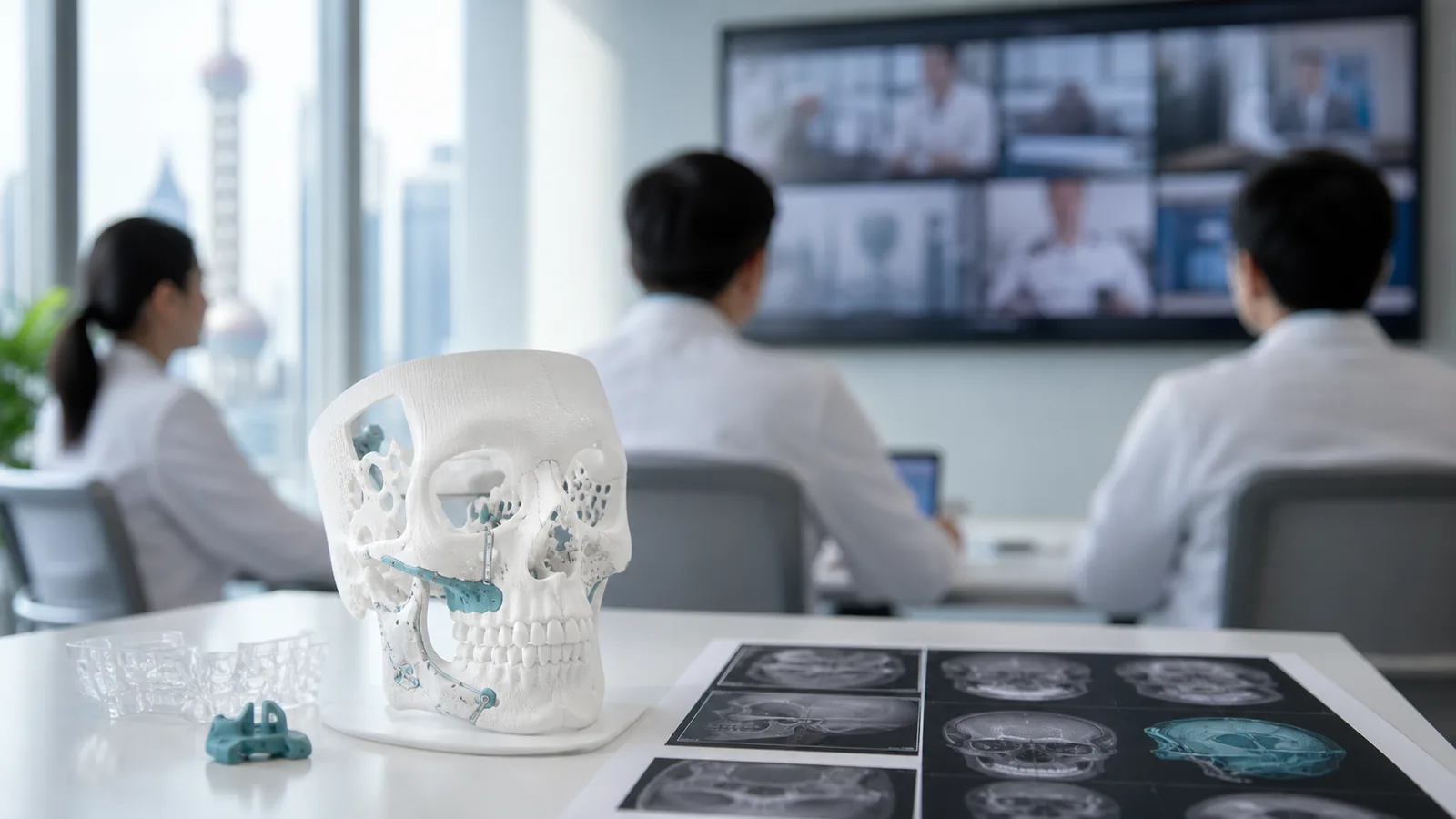
Original CareNavigator-generated editorial image.
Quick Answer
According to a Liberation Daily report, specialists in Shanghai and Kashi held a remote multidisciplinary consultation for a 14-year-old patient from Kazakhstan with a severe form of hemifacial microsomia, a rare condition affecting craniofacial development. The report described a staged, individualized plan developed after local assessment in Kashi and a cross-regional review involving oral and craniofacial, reconstructive, and head-and-neck specialists.
What Happened
The report said the patient had a particularly severe presentation, with complex craniofacial differences including mandibular underdevelopment, ear deformity, facial nerve involvement, and developmental concerns in the lower face and neck.
The family had previously pursued treatment elsewhere. According to the report, earlier procedures had not produced the hoped-for correction, and an earlier graft had been fully absorbed. After reading about specialist work presented at a 2025 international craniofacial surgery meeting in Shanghai, the family sought a higher-level review.
Before the remote consultation, Kashi Second People's Hospital completed imaging, oral-specialty assessment, hearing-function testing, and other clinical preparation. The team also collected relevant data and created a 3D-printed dental model to support the discussion.
A Multi-Specialty Discussion Across Shanghai and Kashi
The report described the consultation as bringing together specialists from Shanghai Jiao Tong University School of Medicine Affiliated Ninth People's Hospital, Kashi Second People's Hospital, and the Shanghai medical-assistance team in Kashi.
After reviewing the case, the specialists outlined a staged plan. The reported first phase included surgically assisted maxillary expansion and minimally invasive removal of impacted teeth, intended to improve conditions for later reconstruction. Subsequent stages would be considered according to the patient's recovery and could include microsurgical bone reconstruction, ear reconstruction, and facial-nerve functional repair.
The report emphasized that the goal was not a single procedure, but a sequence of care designed around both craniofacial form and function.
Why This Update Matters
This is a useful example of how advanced care can depend on coordinated expertise, not only on one hospital visit. The report shows local assessment, digital preparation, remote case discussion, and multiple specialties being brought into one treatment conversation.
For families facing a complex case across borders, the most useful first step is often to make the case review-ready: organize imaging, prior surgical records, specialist notes, and the questions that need to be answered. CareNavigator can help families structure that process, compare relevant China-based pathways, and coordinate appropriate multi-specialty review. Diagnosis and treatment decisions remain with the treating medical teams.
What This Does Not Mean
The report describes an individualized plan for one patient. It does not mean that the same sequence, timing, or treatment options apply to other patients with craniofacial conditions. Any pathway must be reviewed case by case by qualified clinicians.
If your family is exploring a complex treatment pathway in China, tell us your situation. CareNavigator can help you prepare the right questions, organize the case, and understand which expert or hospital pathways may be worth reviewing.
Related CareNavigator Resources
- China Advanced Treatment Updates
- Questions to Ask Before Complex Surgery Abroad
- Pathways Decision Library
- Why China
- How CareNavigator Helps
- China Treatment Navigation Guide
Source Notes
This source-led update is an editorial rewrite of a Liberation Daily report. It summarizes the reported facts in new English-language wording and does not reproduce the original article. The report's clinical information has not been independently evaluated by CareNavigator.
Primary source: Liberation Daily report published via Shangguan News on July 16, 2026.