Proton Therapy for Nasopharyngeal Cancer: Sparing Critical Structures at the Skull Base
Proton Therapy for Nasopharyngeal Cancer: Sparing Critical Structures at the Skull Base
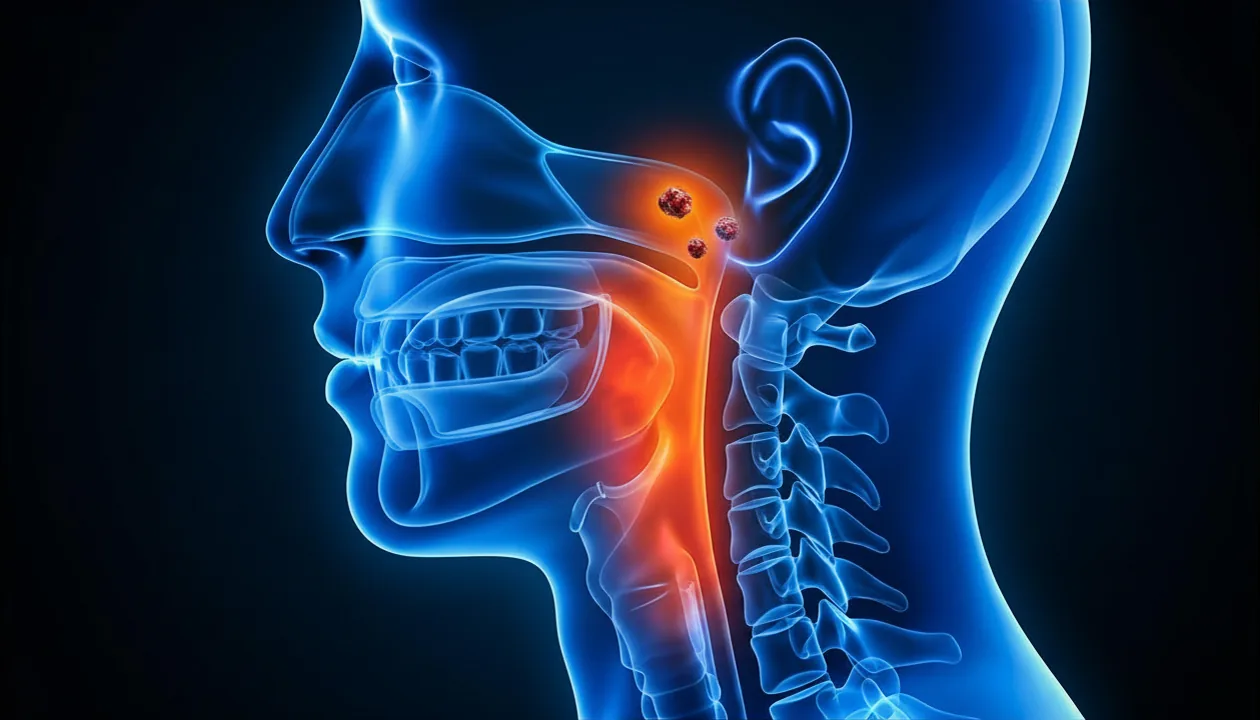
Nasopharyngeal carcinoma presents unique challenges for radiation therapy. The tumor arises at the base of the skull, immediately adjacent to the brainstem, spinal cord, optic nerves, temporal lobes, and the hearing apparatus of the inner ear. Treating this disease effectively while preserving quality of life demands the most precise radiation delivery available.
Proton therapy's physical properties make it particularly well-suited for nasopharyngeal cancer treatment, allowing radiation oncologists to deliver curative doses to the tumor while protecting the critical neural structures that surround it.
The Anatomical Challenge
The nasopharynx sits in a anatomically complex location at the junction of the skull base and upper throat. Tumors here frequently involve the bony skull base, extend into the cavernous sinus near the optic nerves, or involve the jugular foramen near the lower cranial nerves.
Conventional photon radiotherapy must pass through healthy brain tissue to reach the nasopharynx from external beam directions. This results in unavoidable dose to the temporal lobes, pituitary gland, and normal brain tissue surrounding the tumor.
Proton therapy's Bragg Peak allows radiation oncologists to deposit the full radiation dose precisely at the tumor location with minimal penetration beyond. For nasopharyngeal cancer, this means the brain, temporal lobes, and other critical structures receive substantially less radiation than with conventional techniques.
Clinical Advantages for Nasopharyngeal Cancer
The dosimetric advantages of proton therapy translate into meaningful clinical benefits for nasopharyngeal cancer patients.
Reduced neurocognitive impact: The temporal lobes are critical for memory, executive function, and processing speed. By minimizing radiation exposure to these structures, proton therapy may help preserve cognitive function that photon radiotherapy typically compromises.
Preserved endocrine function: The pituitary gland sits directly above the nasopharynx and receives unavoidable radiation in photon treatment plans. Proton therapy can significantly reduce pituitary dose, preserving hormonal function and reducing the need for lifelong hormone replacement therapy.
Better hearing outcomes: The cochlea and auditory structures are adjacent to the nasopharynx. Proton therapy's precision allows for better sparing of these structures, potentially preserving hearing sensitivity, particularly for patients receiving concurrent chemotherapy known to be ototoxic.
Lower risk of radiation-induced brain necrosis: The reduced integral dose of proton therapy may decrease the rare but serious complication of temporal lobe necrosis that can occur years after photon radiotherapy for nasopharyngeal cancer.
Treatment Protocol
Proton therapy for nasopharyngeal cancer typically involves definitive radiation therapy, usually in combination with chemotherapy for advanced disease. Treatment is delivered daily over seven to eight weeks.
The treatment requires precise immobilization with custom masks to ensure accurate daily positioning. Advanced image guidance using cone-beam CT verifies positioning before each treatment.
Concurrent chemotherapy, typically cisplatin-based regimens, is frequently integrated into the treatment plan for locally advanced disease. The reduced toxicity profile of proton therapy may allow patients to better tolerate completion of full chemotherapy courses.
Long-Term Quality of Life
For nasopharyngeal cancer survivors, the long-term quality of life implications of their treatment are paramount. This is often a younger patient population with decades of life ahead of them.
By reducing dose to critical structures, proton therapy offers the potential for not just cure, but cure with preserved neurological function, hearing, vision, and endocrine health. These quality of life advantages may be particularly pronounced for the subset of patients with nasopharyngeal cancer who experience long-term survival following their treatment.